How to Choose the Right Muzzle for Your Dog, and how to get them accustomed to wearing it: A Zürich Behavior Specialist's Guide
Muzzle training is often associated exclusively with aggressive dog’s management. However, learning how to properly select, fit and condition a muzzle is a practical skill every dog owner should master.
Whether you’re completing mandatory practical dog training courses in the Canton of Zurich, preparing for travel with a dog around Europe, prevent your dog from picking up poison baits in local parks, managing dog reactivity and aggressive behavior, — you’re at the right place. Let me walk you through the topic: how to choose a muzzle, how to fit a muzzle, how to train your dog to wear a muzzle.
Ethical questions
I don’t know how many times, when I had my dog Dias next to me with a muzzle on, people approached me saying: it’s cruel to put THIS THING on a dog! Poor doggy! I could never do THIS to my dog!
So let me start with this: a muzzle isn’t cruel. A muzzle is a tool, and like any tool, it can be used correctly and do good, or incorrectly and cause discomfort. It is a safety equipment, just like a seatbelt in a car. You don’t think twice about wearing a seatbelt, or about buckling up your kid, right?
A dog, who is accustomed to wearing a muzzle, gains freedom.A dog owner who knows their dog can wear a muzzle gains peace of mind and confidence about including their dog in the real world.
Part 1: the 7 muzzle types and their specific uses
Choosing the right muzzle, makes sure your dog is safe and sound. Depending on your goal, you may need a muzzle made of specific material and having a specific shape.
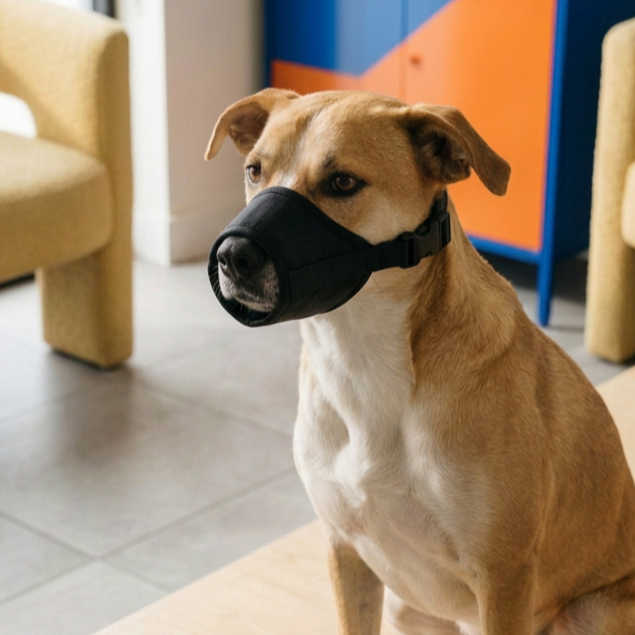
Medical / Strap Muzzle (Fabric or Leather)
Designed strictly for short medical procedures or quick emergencies. Because it holds the mouth closed, it must never be used on walks or during exercise, as it prevents panting and temperature regulation.
Bite protection 5/5
Poison bait protection 5/5
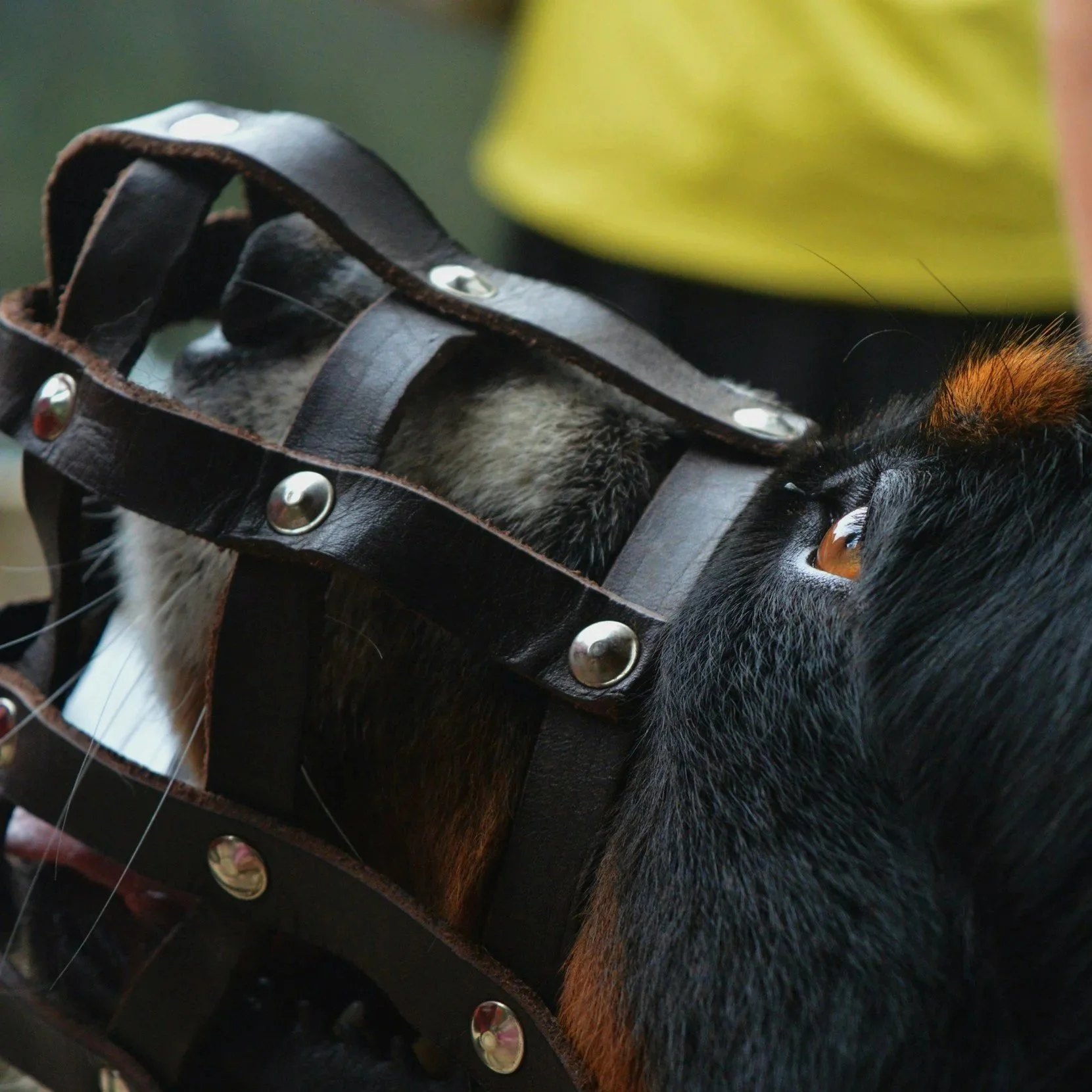
Soft Open Muzzle (Biothane or Leather)
Lightweight, flexible, suitable for travelling. The main point here is that this muzzle is soft, so it provides no real bite protection.
Bite protection 2/5
Poison bait protection 2/5
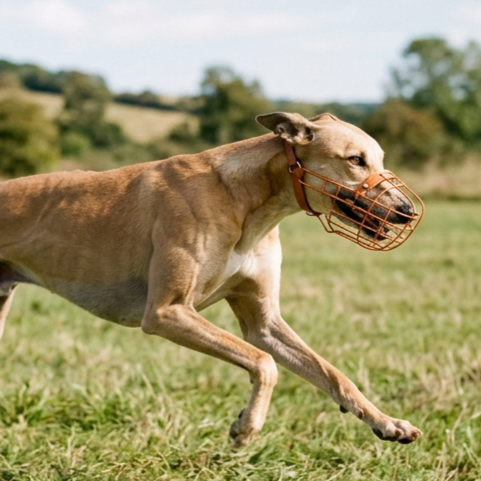
Coursing Muzzle (Plastic or Thin Metal)
Originally designed for sighthound sports. Lightweight, allows full mouth breathing. Since the materials are thin, it offers medium bite protection but may not be safe enough for a high-grade aggressive behaviors.
Bite protection 3/5
Poison bait protection 2/5
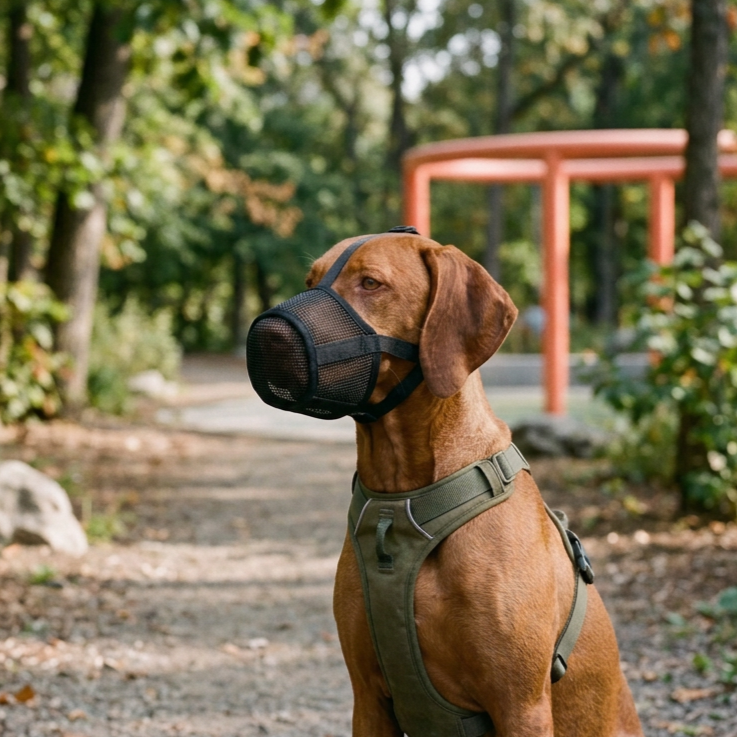
No Pick-Up / Poison-Bait Muzzle
Features a fine mesh or shield designed specifically to stop dogs from eating garbage, poison bait, or feces off the ground. There are also options in plastic or metal made specifically for this purpose. Depending on the material, offers low to medium bite protection.
Bite protection 1-4/5
Poison bait protection 5/5
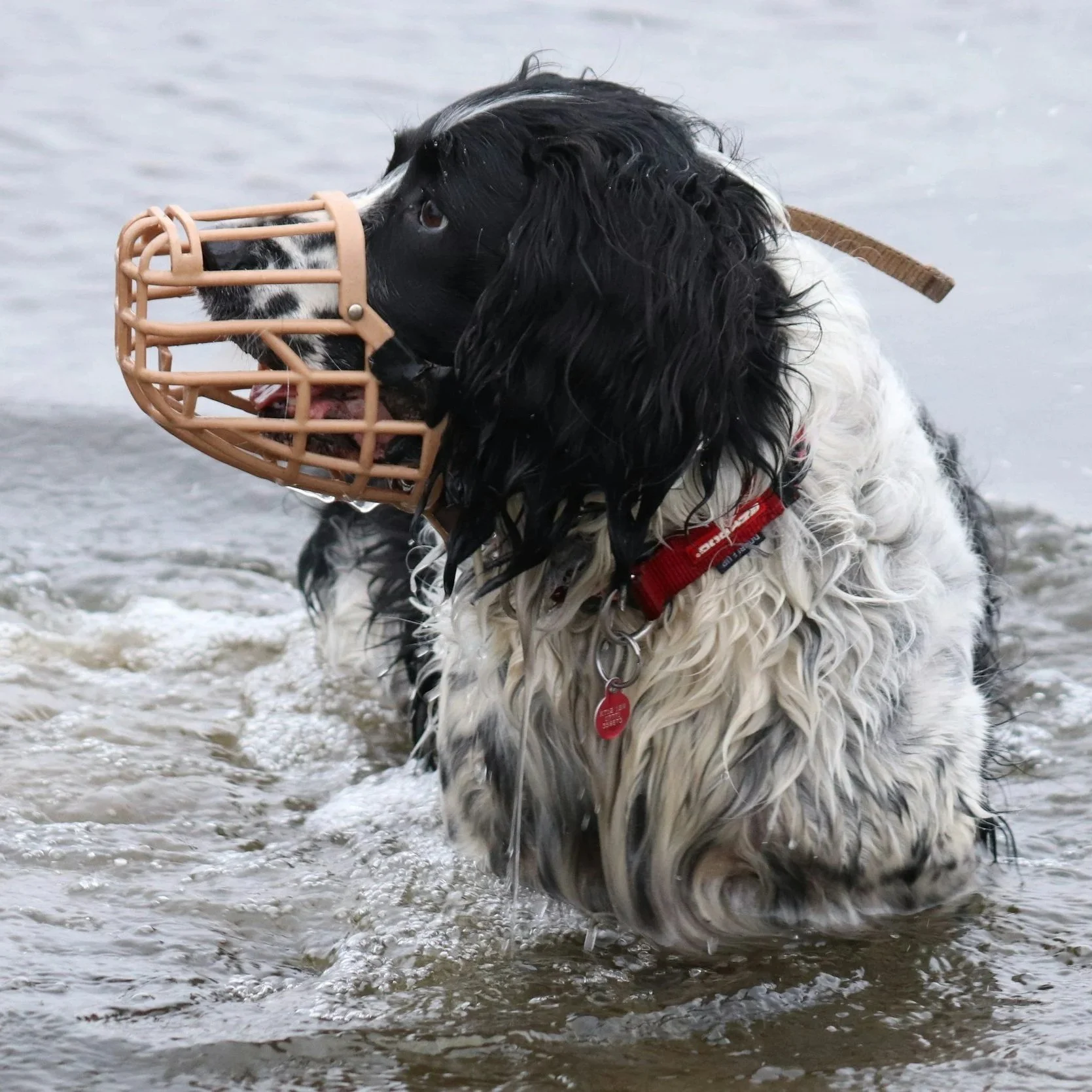
Standard Plastic Basket Muzzle
A versatile option for general public transit regulations, vet visits, or routine training. It’s one of the most common options to find in your local pet store. Allows panting, drinking and eating treats. Cheaper options may be not so durable and crack under heavy impact.
Bite protection 3/5
Poison bait protection 2/5
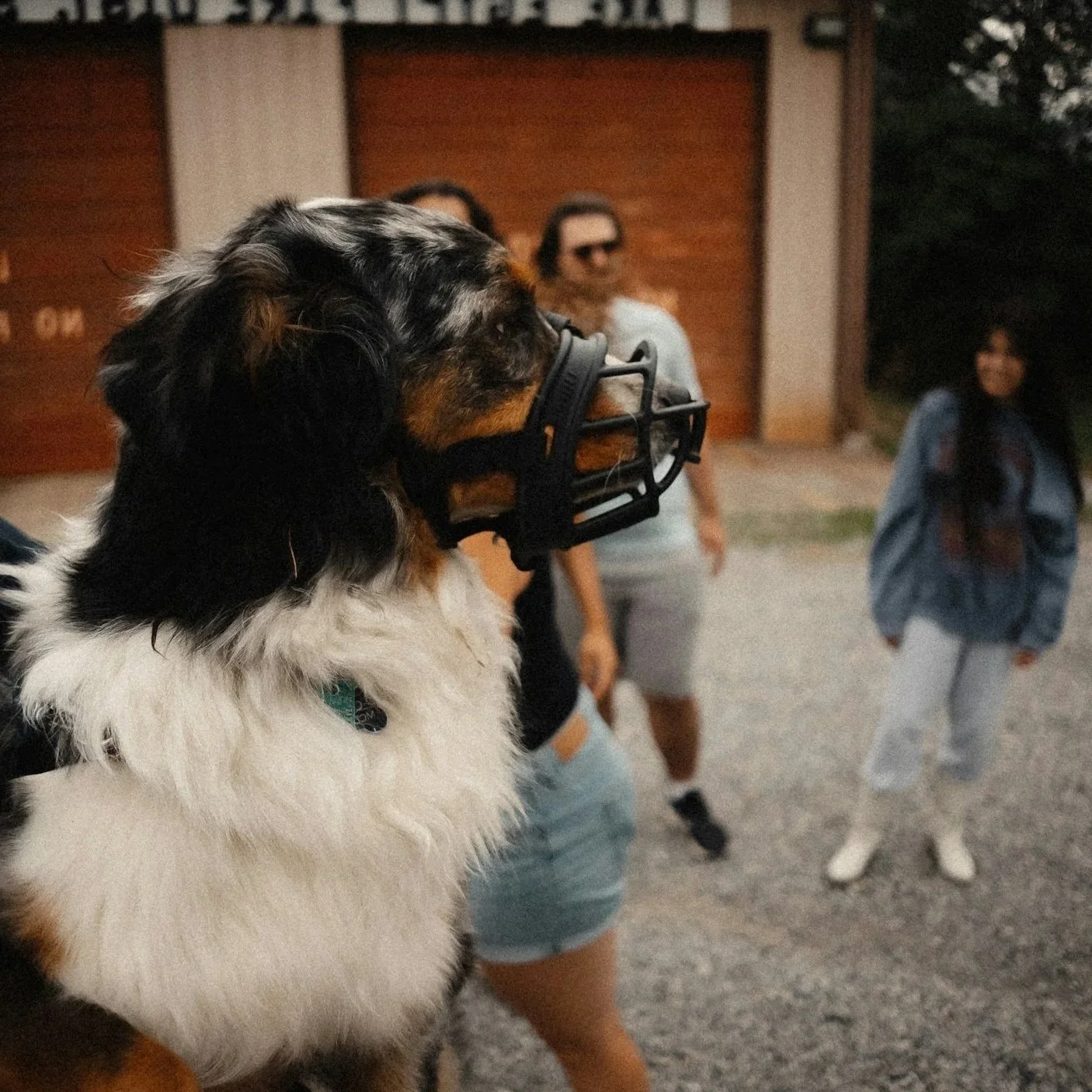
Baskerville Muzzle
A well-known brand, making muzzles in a recognisable shape. Made of thick plastic with wide openings that allow you to feed treats during your training sessions. The material is heat-moldable which allows you to shape the muzzle to fit your dog’s snout.
Bite protection 4/5
Poison bait protection 1/5
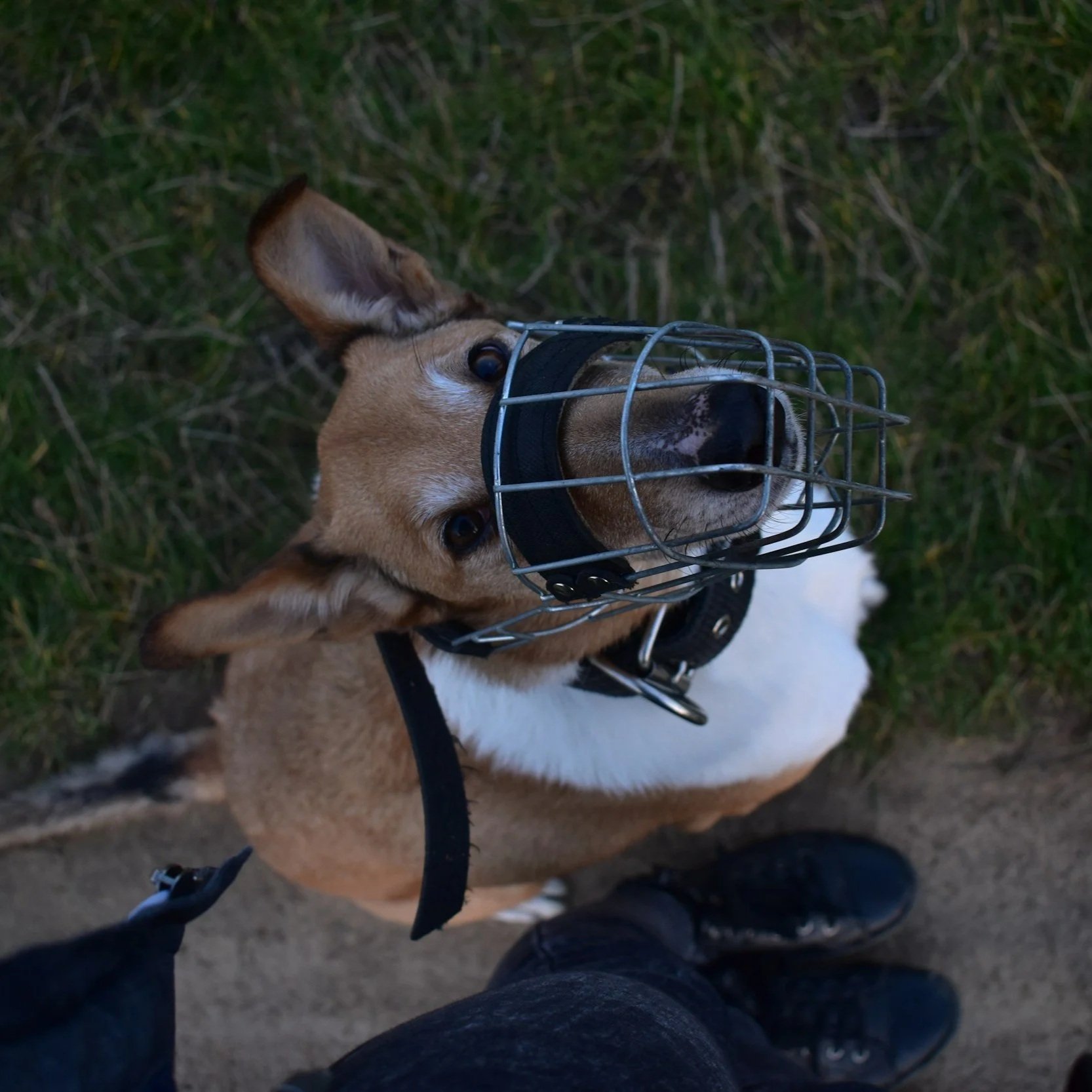
Metal Basket Muzzle
The gold standard for dogs with an active bite history. It offers maximum strength while providing ventilation, allowing your dog to pant, drink water and accept treats.
Bite protection 5/5
Poison bait protection 2/5
Measuring and Fitting
The best practice there would be first to choose a muzzle, then measure your dog according to the instructions provided by the manufacturer.
Keep in mind:
if you’re choosing an everyday life / travel muzzle, it should allow your dog to open their mouth
there should be 1-2 cm left between the tip of the nose and the front of the muzzle; and no less than 1 cm between the lower eyelid and the beginning of the muzzle.
the muzzle should be 1-2 cm wider than the snout to prevent rubbing
short-nosed dogs may require an additional forehead strap to keep the muzzle in place
Security check: when the muzzle is on, try pulling it forward and down. A properly fitted muzzle should not slide off the snout.
Muzzle training
Before I go into training, I need to say this as a trainer working with reactive dogs with a high aggressive potential: there are situations when instead of training, you follow a habituation protocol. You put the muzzle on, and you walk with your dog as if they were born like this. It’s a quick, effective and safe approach for dogs with an actual bite risk.
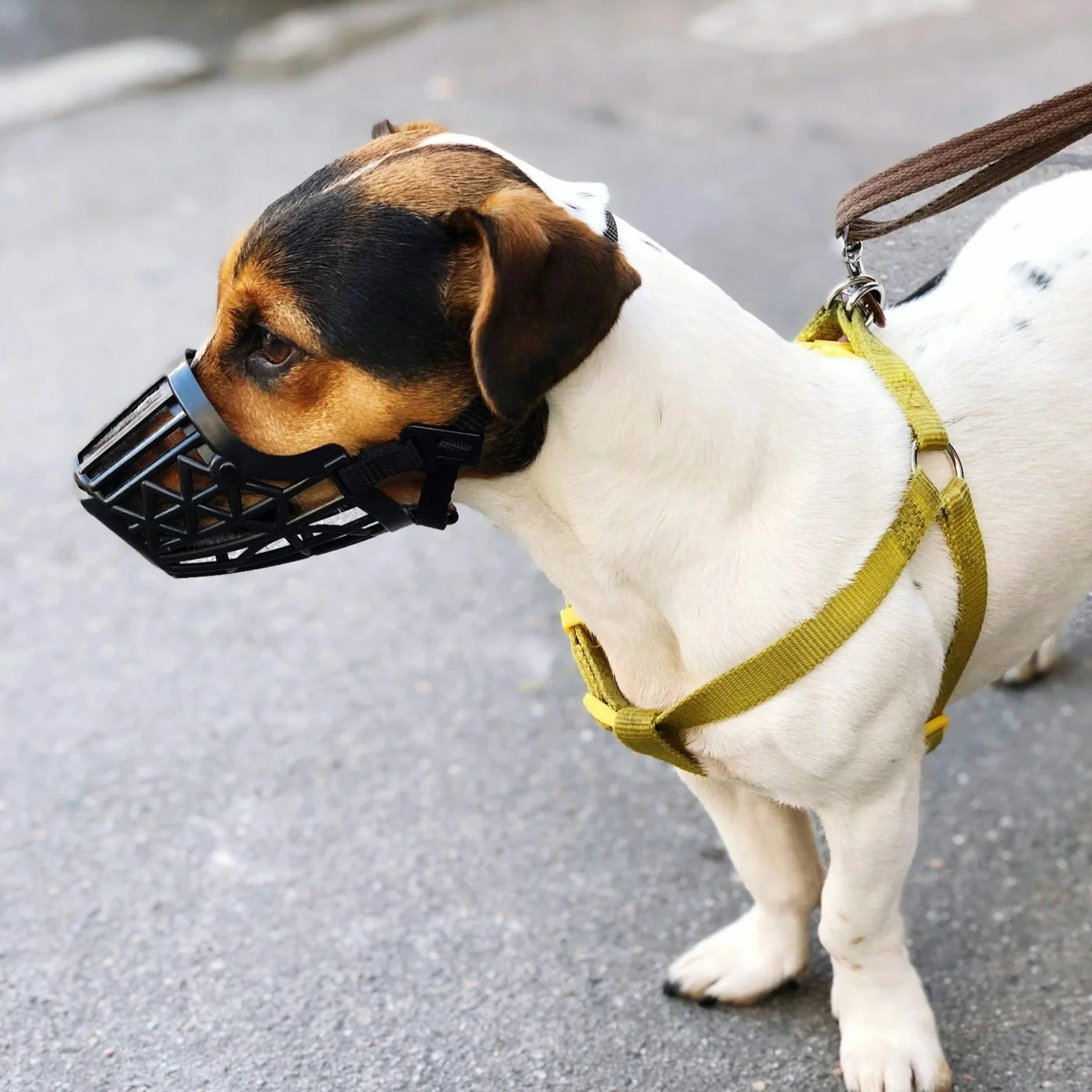
Now, a slow and pleasant approach step by step
Introduction: Show the muzzle and immediately give your dog a treat
Voluntary Entry: Hold a treat at the opening and let the dog place their snout inside voluntarily
Verbal Cue: Pair the action with a command (e.g., "Muzzle") before the dog inserts their nose
Building Duration: Feed multiple treats sequentially while the nose remains inside the basket
Strapping: Gently place straps behind the ears while your dog is eating the treats, without closing the buckle
Buckling & Movement: Fasten the buckle, reward, take several active steps forward, and unbuckle.
Repeat each step 5-10 times before moving to the next one. Make it fun. Walk with a muzzle, play with your dog while they are wearing it.
Conclusion
Training your dog to wear a muzzle is a mark of a responsible dog owner who is deeply caring about their dog’s safety.
If you need assistance selecting your equipment, training your dog to wear a muzzle, completing your mandatory course goals or overcoming your dog’s reactivity, contact Jenya from BOOPCAMP Dog School at contact@boopcamp.ch or via Instagram @boop.camp.
Bonus
There are two places where I send my students to get their muzzles:
https://maulkorb-shop.ch/ via Swiss Post
https://shop.dogmundo.ch/ in Horgen